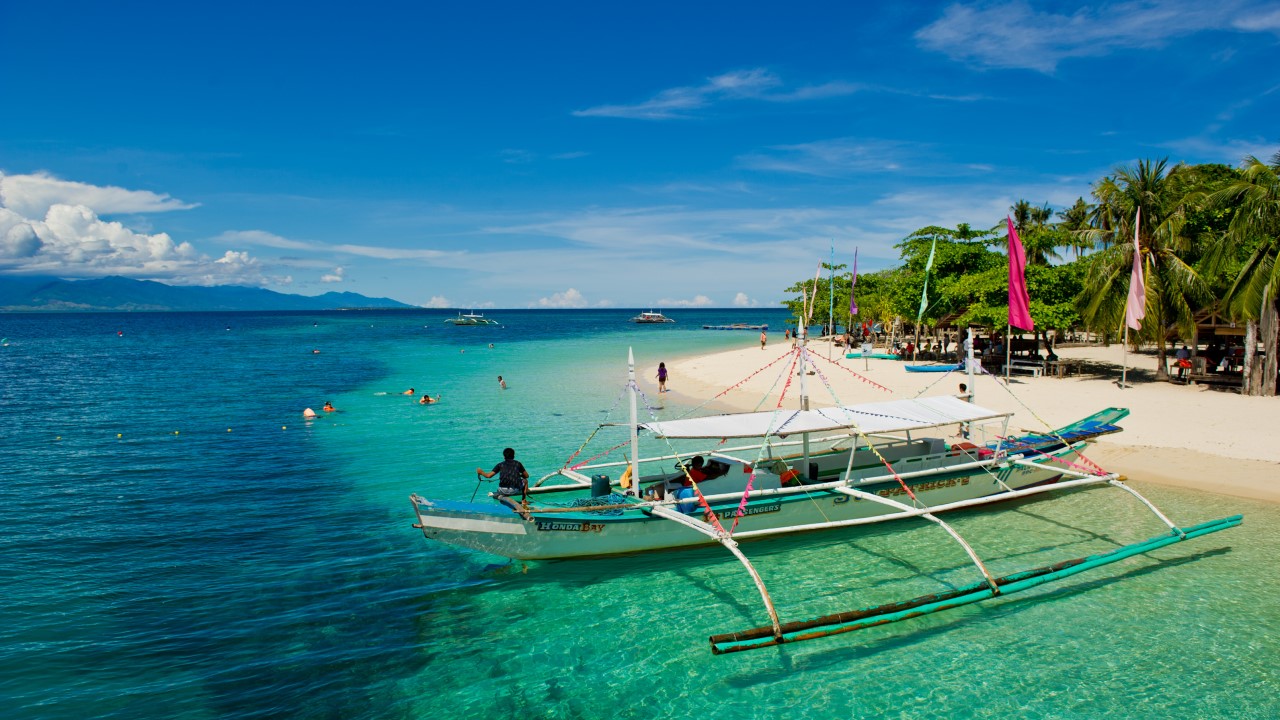
Coastal and marine tourism, fisheries, and aquaculture are major economic contributors in Southeast Asia. Photo credit: Asian Development Bank (ADB)
Southeast Asia is highly dependent on ocean resources, which face growing threats from climate change, pollution, biodiversity loss, and overfishing. Coastal and marine tourism, fisheries, and aquaculture are major economic contributors in the region, with coastal communities relying heavily on marine ecosystems for livelihood and food supply. Indonesia, Malaysia, the Philippines, and Thailand are among the world’s top producers in the fishery sector.
Two subregions in Southeast Asia, the Brunei Darussalam–Indonesia–Malaysia–Philippines East ASEAN Growth Area (BIMP-EAGA) and Indonesia–Malaysia–Thailand Growth Triangle (IMT-GT), are developing a joint blue economy strategy with the support of the Asian Development Bank (ADB). It emphasizes inclusivity through multi-stakeholder collaboration to ensure that everyone benefits from the blue economy. It seeks to empower local communities and build strong partnerships to take on not just the opportunities but also the challenges.
“Incredible opportunities lie ahead for sustainable development in the marine economies of BIMP-EAGA and IMT-GT, which will impact the rest of Asia and the Pacific. As we navigate through the post-pandemic era, we are presented with a unique chance to build back bluer," said Gary Krishnan, senior country specialist at ADB’s Southeast Asia Department, at a recent 5-day stakeholders’ consultation workshop on the Joint BIMP-EAGA and IMT-GT Blue Economy Strategy 2030.
The Association of Southeast Asian Nation (ASEAN) recognizes the ocean’s significant contribution to the economy, which has been described as the “blue economy.” It envisions the blue economy as a new engine for sustainable growth, citing opportunities in traditional and emerging sectors, such as renewable energy, biotechnology, and research.
Held in in Kota Kinabalu, Sabah from 19 to 21 June, the workshop was attended by 55 participants, including representatives from the BIMP-EAGA and IMT-GT national secretariats, BIMP-FC, and CIMT; national focal points of the BIMP-EAGA clusters in environment, agriculture, tourism, power and energy infrastructure, transport, and the BIMP-EAGA Business Council; and national focal points of the IMT-GT working groups on environment, agriculture, tourism and transport, and the Joint Business Council.
The stakeholders’ consultation workshop builds on the initial groundwork started in November 2023, through a 5-day workshop also held in Kota Kinabalu, which kicked off discussions on the sustainable use of ocean and coastal resources in the subregions.
Blue Initiatives in Kota Kinabalu
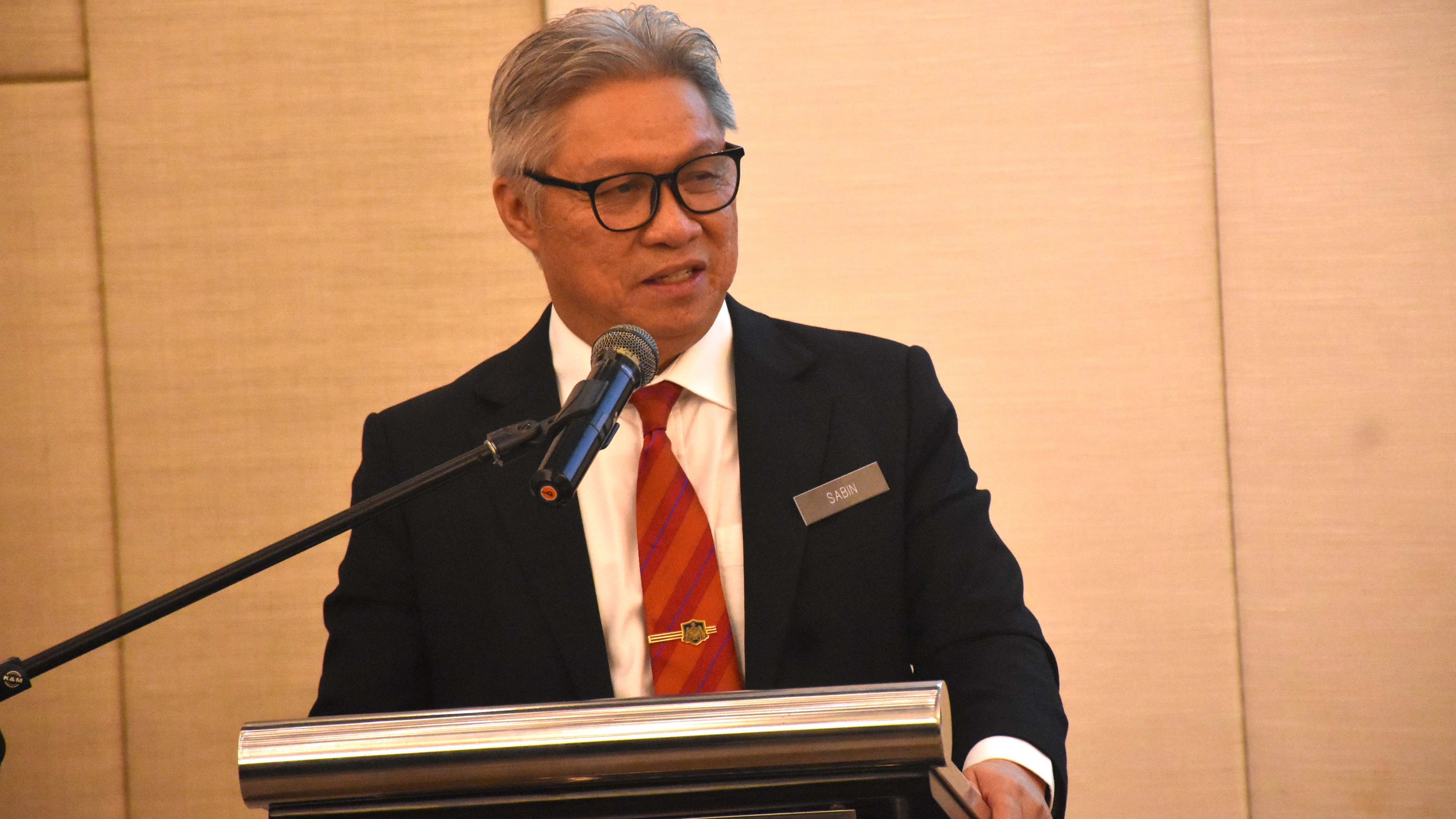
Kota Kinabalu Mayor Datuk Seri Sabin Samitah, Photo credit: Mohd Rizal Taman.
“As a coastal city, we have much to learn from Kota Kinabalu on their experience in blue economy development,” said Krishnan.
Kota Kinabalu is one of the pilot cities under BIMP-EAGA’s Green Cities Initiative (GCI). With assistance from ADB, it developed a Green City Action Plan (GCAP), which includes a pipeline of blue projects.
In his keynote address, Kota Kinabalu Mayor Datuk Seri Sabin Samitah shared the city’s progress in implementing the plan and its blue economy initiatives. “Kota Kinabalu City Hall has been preparing a comprehensive long-term coastal management plan that includes climate-intelligent zoning to address current and future climate risks. Following the COVID-19 pandemic, the City Hall organized the International Symposium on Developing and Managing Water’s Edge City. The knowledge exchange and stakeholder insights from this symposium contributed to the concurrent initiative of the Kota Kinabalu Waterfront Masterplan.”
The mayor also announced that the Implementation Monitoring and Evaluation Report for Kota Kinabalu Climate Change Actions 2024–2030, which reflects the interventions outlined in the GCAP, will be launched at the end of this month. This illustrates Kota Kinabalu’s commitment to building a sustainable and resilient future.
Taking a subregional approach
As building blocks of ASEAN integration, BIMP-EAGA and IMT-GT are well-placed to advance regional cooperation for the blue economy. The subnational character of the two subregions can help mobilize local governments and the private sector. Their cooperation programs are project-oriented and thus can help put the development of the blue economy in Southeast Asia on the fast track.
Both subregions have incorporated blue economy approaches in recent strategic documents. The midterm review report of BIMP-EAGA’s Vision 2025 highlights the need to integrate green and blue approaches into infrastructure development, enhance climate resilience, promote resource efficiency, and engage in participatory planning. This involves the development of smart and green cities, the adoption circular economy approaches, and mainstreaming sustainable and environmental components in development projects.
The IMT-GT Implementation Blueprint 2022–2026 emphasizes adopting a green, blue, and circular economy to facilitate a stronger recovery from the COVID-19 pandemic. This approach intends to accelerate member counties’ commitments to decarbonize their economies, reduce biodiversity loss, open new markets, unlock investment opportunities—including in the blue economy, and create green and blue jobs, among others.

The outputs of the stakeholders' consultation workshop will be used in finetuning the joint blue economy strategy. Photo credit: Mohd Rizal Taman.
An integrated strategy on the blue economy will help BIMP-EAGA and IMT-GT establish and enhance the enabling conditions for growth by supporting national, subregional, and ASEAN initiatives to build blue economy markets. While the member countries have made progress in developing national ocean strategies and blue finance frameworks to support sovereign and private investment in the blue economy, the scale of work ahead requires collaboration and strong partnerships.
Supported by two ADB technical assistance projects to enhance the effectiveness of subregional programs and promote innovations in regional cooperation and innovation and co-organized with the BIMP Facilitation Center (BIMP-FC) and the Centre for IMT-GT Subregional Cooperation (CIMT), the stakeholders’ workshop assessed the challenges and opportunities in blue economy development in the subregions, agreed on key elements of the joint strategy, and identified measures to implement the strategy. The outputs of the workshop will be used in finetuning the joint blue economy strategy.
The strategy will be further discussed in BIMP-EAGA and IMT-GT clusters and working group meetings in the coming months. It will be finalized for presentation at the BIMP-EAGA and IMT-GT Ministerial Meetings later this year.