Environment Pillar

BIMP-EAGA harbors a vast array of species, including a significant portion of the world's terrestrial and marine biodiversity. The Heart of Borneo, which straddles Indonesia, Malaysia, and parts of Brunei Darussalam, is the largest contiguous forest area remaining in Southeast Asia. The tropical rainforest is home to approximately 6% of the world’s biodiversity. The Sulu–Sulawesi Seas—located within the borders of Indonesia, Malaysia, and the Philippines—is a highly biodiverse, globally significant biogeographic unit in the heart of the Coral Triangle, the center of the world’s highest concentration of marine biodiversity.
BIMP-EAGA wants to become a climate- and disaster-resilient subregion that safeguards well-preserved biodiversity; promotes green, blue, and low-carbon growth; leverages sustainable practices; and strengthens environmental policy and governance to achieve environmentally sustainable development.
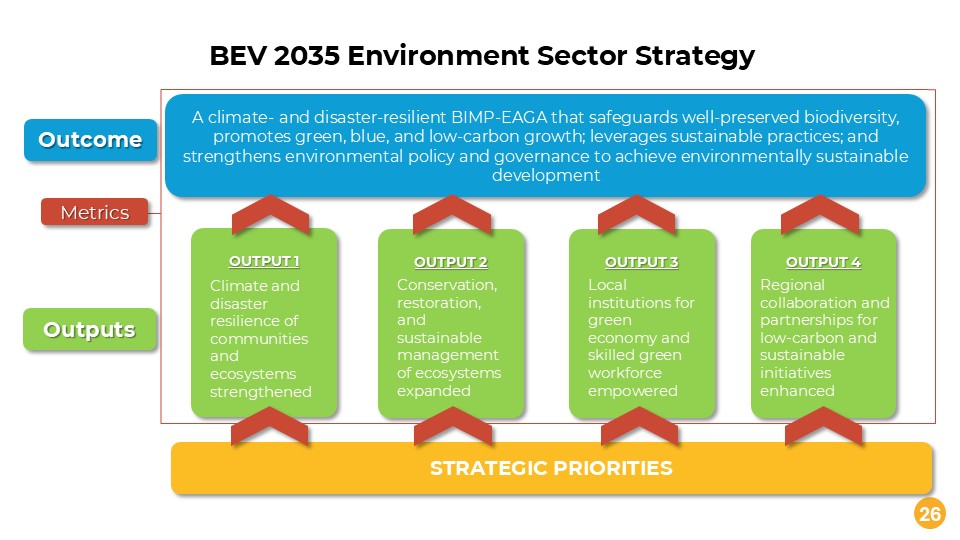
Strategic Priorities
1. Promote low-carbon development and climate and disaster resilience.
2. Mainstream sustainable approaches, including ecosystembased approaches and nature-based solutions, while harnessing opportunities in the green, blue, and circular economy.
3. Enhance capacities to enable green and blue growth and disaster risk management strategies and implementation.
4. Forge partnerships to mobilize resources for the achievement of environmentally sustainable development.